
The air is gradually becoming cooler, and it finally feels like the season for autumn flowers.
At this time of year, I always find myself wanting to create flowers with an autumn feel. This time, I gathered some of the clay flowers I have made over the years and arranged them into a seasonal palette of muted oranges, soft beige tones, and touches of deeper red.
Even with the same autumn flowers, using slightly muted and deeper shades rather than lots of bright colors creates a calmer, more seasonal atmosphere.
One of the lovely things about clay flowers is that they can be displayed in any season. Still, I enjoy observing the flowers blooming at each time of year, mixing colors inspired by them, and rearranging my collection for seasonal photographs.
Clay Flowers to Make in Autumn
For this arrangement, I gathered dahlias, rosette roses, anemones, zinnias, cosmos, Japanese anemones, ranunculus, and more.
Among them, dahlias and cosmos are the flowers I especially want to make when autumn arrives.
Dahlias come in an incredible variety of petal shapes, forms, and colors.
Large white dahlias have a beautiful presence, and when made in clay, the layers of petals themselves become the focus even with very subtle coloring. They have become one of my recent favorites.
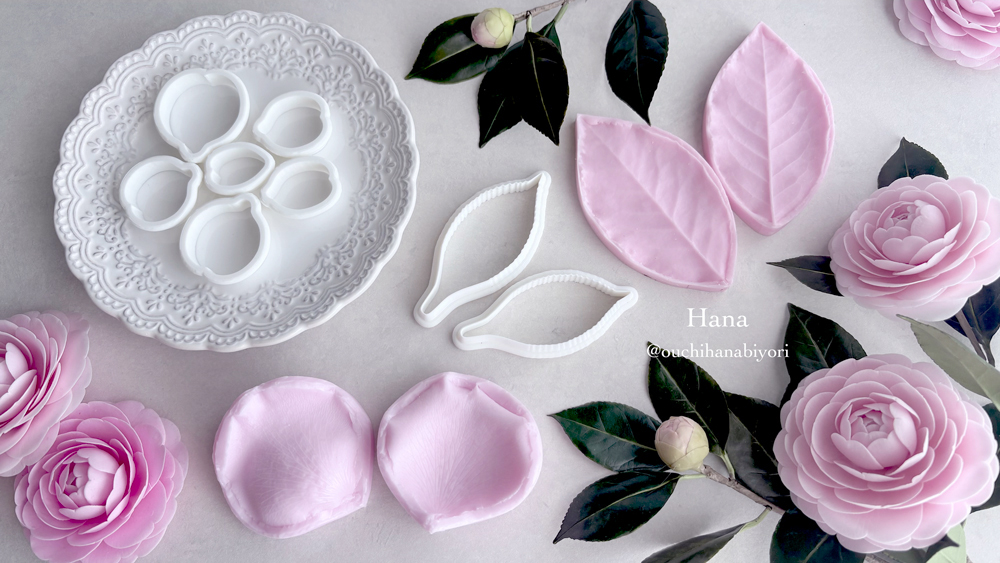
I also make cutters and veiners designed specifically for the petal shapes of my dahlias.
They take a little patience because each petal is shaped individually and layered one by one, but I love watching the flower gradually take form from the center outward.
Cosmos and Japanese Anemones
Cosmos and Japanese anemones add a light, airy feeling to an autumn arrangement.
When simple flowers like these are placed among fuller blooms such as dahlias and roses, they create a little breathing room and make the overall composition feel lighter.
Lessons for making cosmos and ranunculus are also available through my membership.
The video lessons take you through the complete process of creating each flower, from shaping the petals and making the flower center to adding color.
Despite having the word “chrysanthemum” in its Japanese name, the Japanese anemone is actually part of the anemone family.
Its combination of white petals and a yellow center is especially charming, and it is a lovely flower to use when I want to add a little white to an autumn arrangement.
Adding a Touch of Warmth
For an autumn palette, I like to include not only white and pale pink, but also a few warmer tones.
The rosette rose placed at the center of this arrangement was made with a muted orange tone as the base.

Rosette roses are classic roses with layer upon layer of beautifully arranged petals.
Even with the same flower shape, ivory creates a quiet and elegant mood, pink feels soft and romantic, while orange and beige tones instantly give it a more autumnal character.
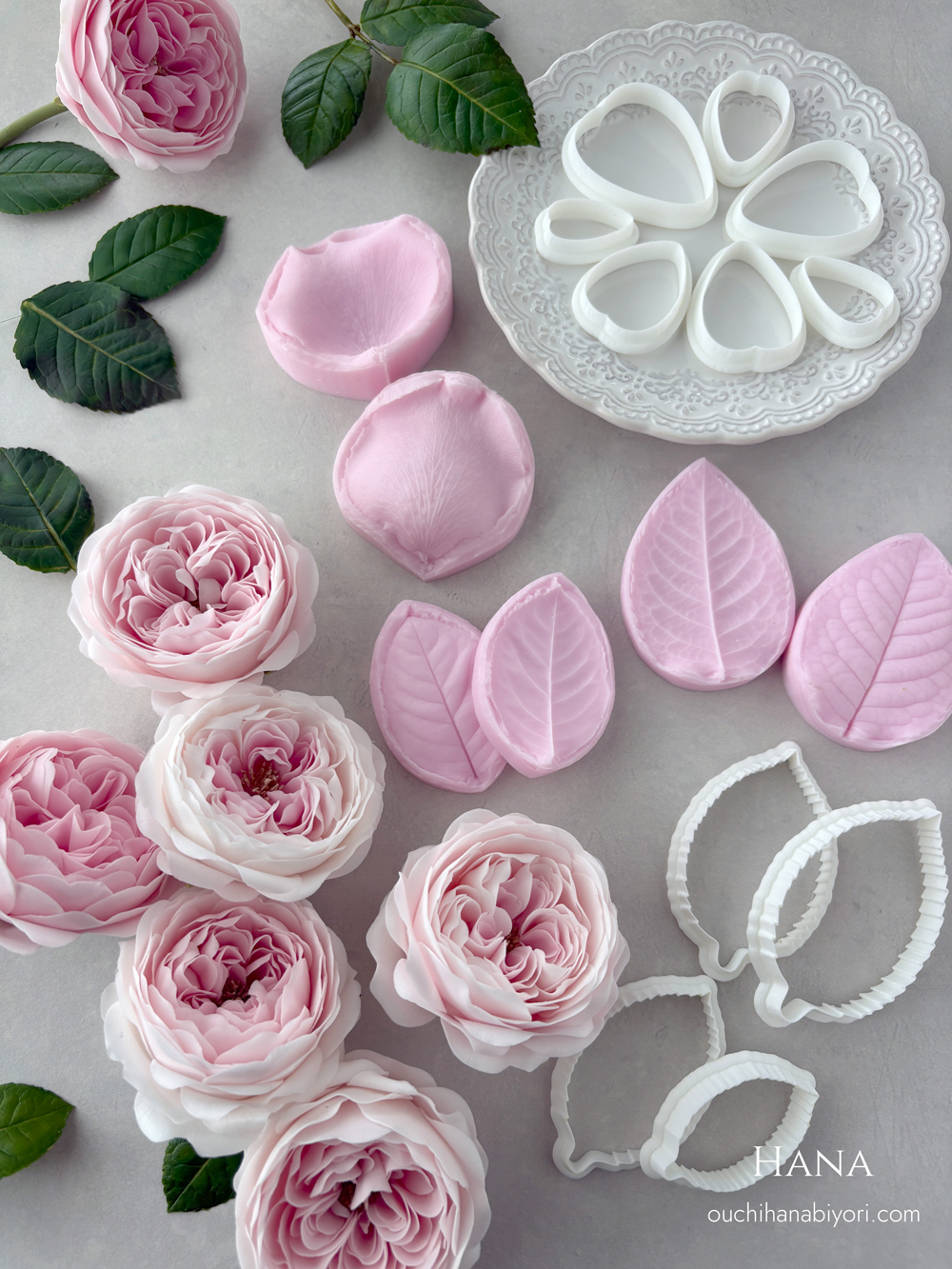
I made this rose using the Rosette Rose Cutter that I previously introduced here in the Journal.
Anemones and Ranunculus
I also included anemones and ranunculus, flowers that can be enjoyed from autumn into the cooler seasons ahead.
The dark center of a white anemone adds a crisp accent and helps bring definition to the whole arrangement.
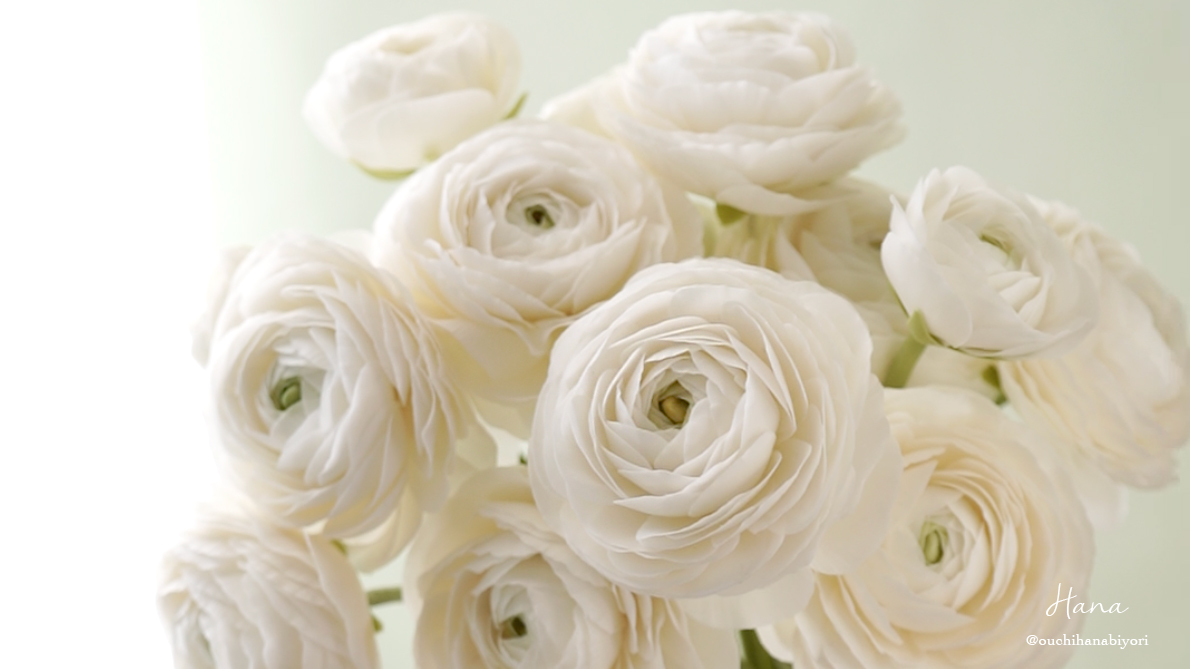
Ranunculus, on the other hand, are loved for their many layers of delicate, thin petals. For this palette, I chose one in a soft ivory shade.
When flowers of different shapes are arranged together, they begin to show expressions that are quite different from when each flower is viewed on its own.
Rounded blooms, flowers with long slender petals, and flowers with distinctive centers.
Simply combining a few different shapes can create a composition that feels almost like a small landscape.
Zinnias in Progress
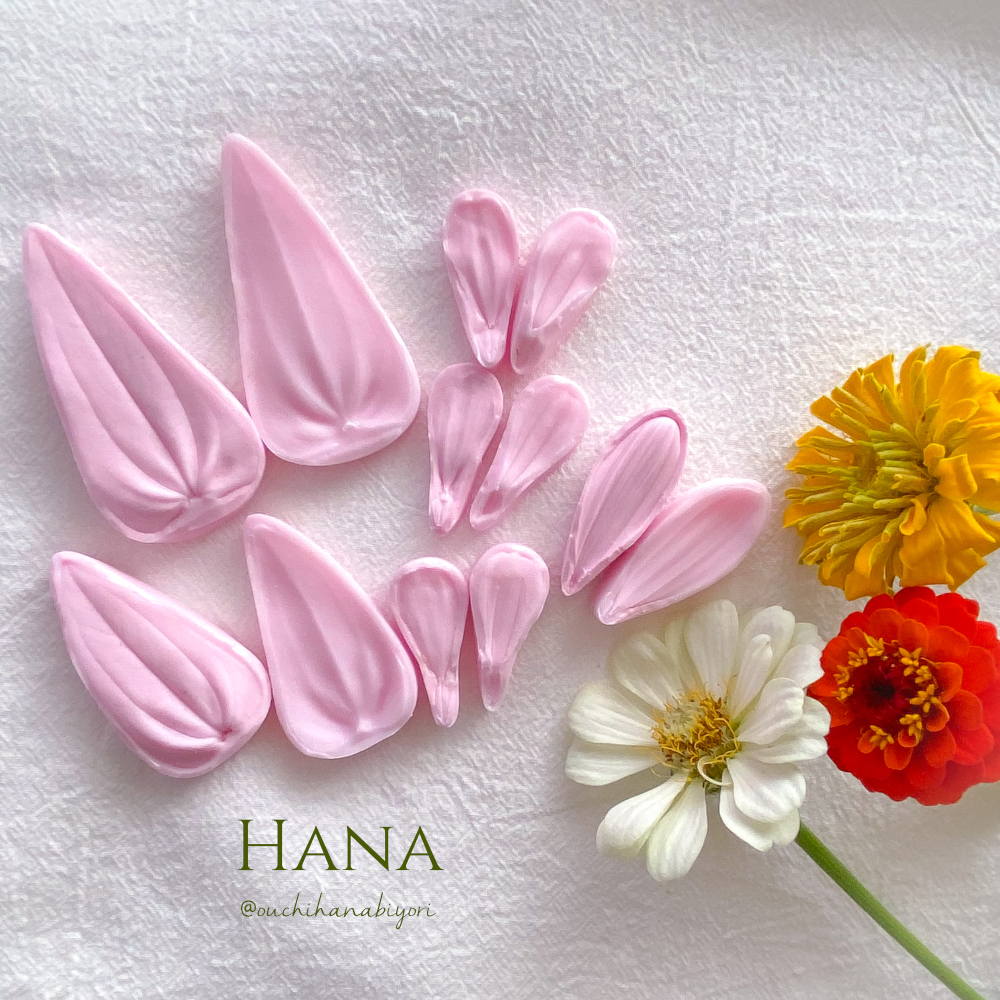
At the moment, I am also working on zinnias.
Zinnias come in many different forms, with variations in petal shape, layering, and the structure of the flower center.
Even among flowers that are all called zinnias, a closer look reveals subtle differences in character. I really enjoy studying them and thinking about how each form might be recreated in clay.
For now, I have started with softly muted pink and apricot tones that blend well with this autumn palette.
They are still a work in progress, but I would like to keep experimenting with different varieties and gradually develop the shapes further.
Observing seasonal flowers, recreating them, and discovering something new along the way.
That process is one of the things I love most about making clay flowers.
Enjoying Autumn Flowers in Clay
I often make flowers in pinks, blues, and other cooler tones, but autumn is a beautiful time to work with muted colors, deep reds, browns, and rich oranges as well. To keep the palette from becoming too dark, I like using ivory as the main color and adding autumn shades here and there to create a soft, gentle gradient.
Another thing I love about clay flowers is that even flowers that would never be available fresh at the same time can be brought together. I can simply take out flowers I made in previous seasons and combine them freely in a new arrangement.
I hope to continue slowly building my collection of seasonal flowers and enjoying new combinations of color and form along the way.
Autumn Palette —
I hope this gives you a little inspiration for your own autumn flower making.