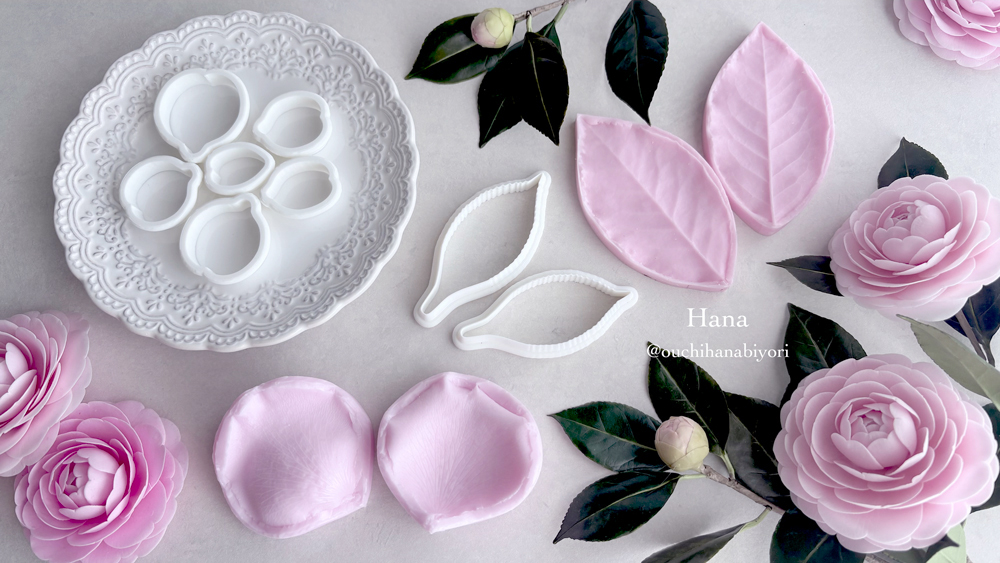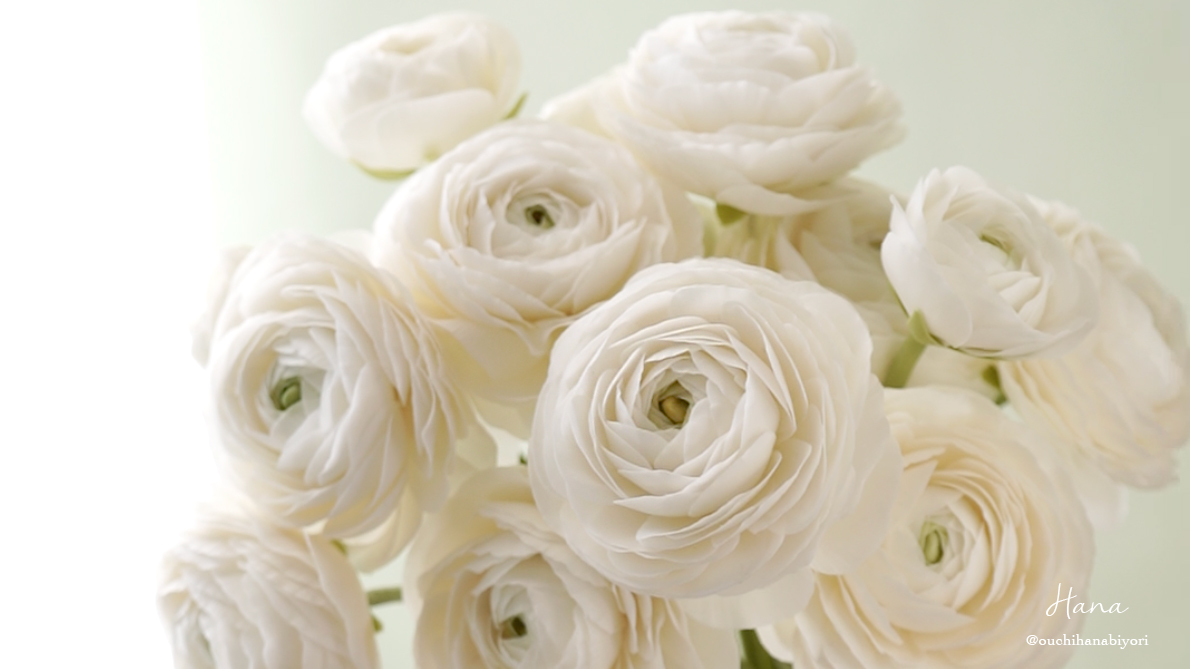
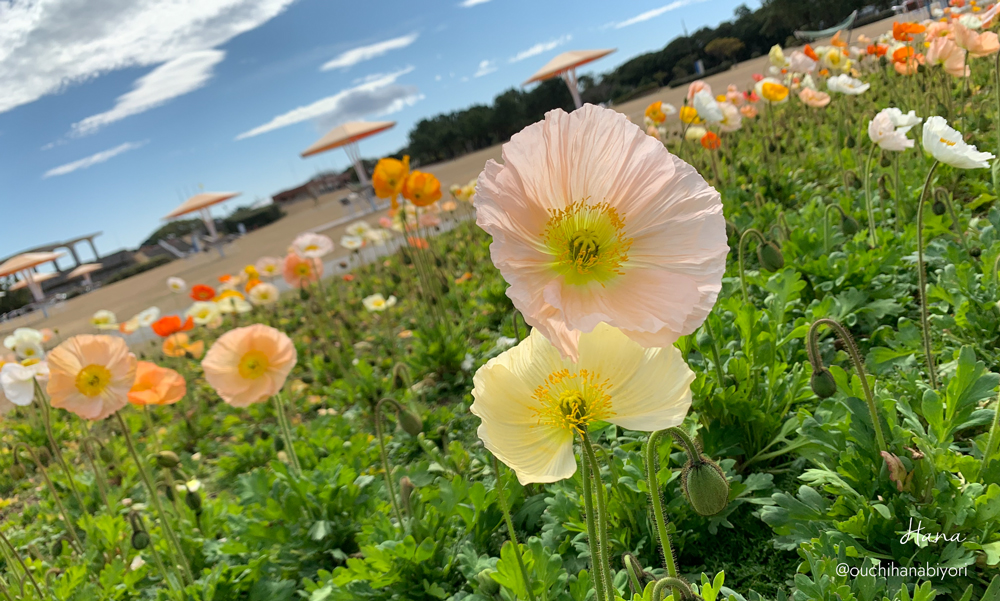
When people see my clay flowers, I often hear, “They look so real!” It’s a genuinely lovely thing to be told. But sometimes I find myself pausing, hands still, and wondering — am I actually trying to make something that looks the same as the real thing?
Aiming for realism — but not trying to make a copy
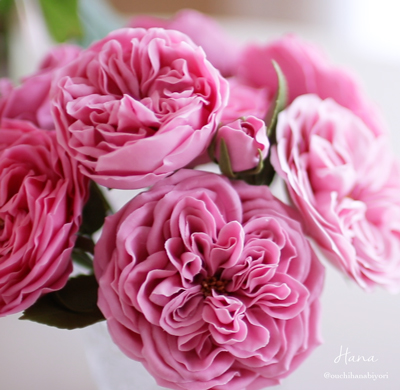
When I start making a flower, the first thing I do is observe the real thing carefully. The way the petals curl, how they layer over one another, the way light passes through them, the subtle shifts in color. I study each flower slowly — looking, touching, trying to truly understand it.
But that observation isn’t about recreating it exactly.
It’s about understanding the flower deeply enough to express its delicacy and atmosphere in my own way. Just as photographing a landscape and painting one are two very different things, making a flower in clay isn’t about copying — it’s about interpreting. So the finished piece will never be identical to the real flower, and honestly, I don’t think it needs to be.
Fresh flowers vs. handmade ones — which is “real”?
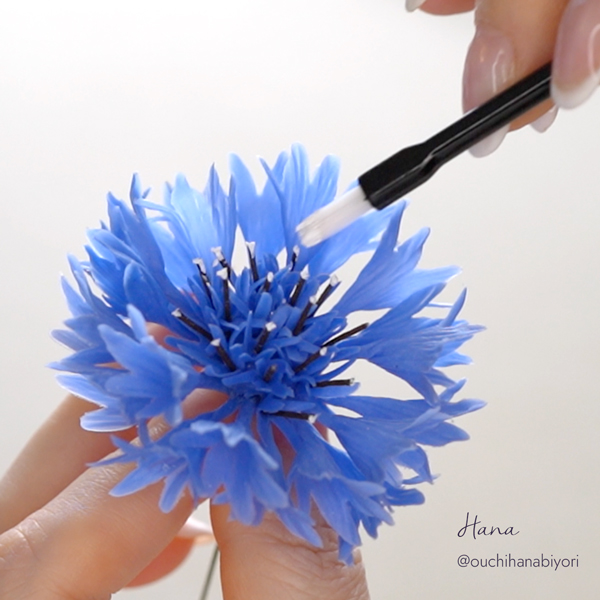
“Artificial flowers are just imitations — they can never compare to the real thing.” I understand why people feel that way. There are things that living flowers have that clay and artificial flowers simply cannot replicate — their fragrance, their freshness, the way they change and fade with time. That’s absolutely true.
But I don’t think that makes handmade flowers any less valuable.
There’s beauty that stays at its best, a delicacy you can hold and touch, a quiet presence that lingers in a space for a long time. Clay flowers have their own magic that nothing else can offer. Fresh flowers, artificial flowers, clay, paper, sugar, plastic — each one has its own charm. You don’t have to put something else down to share what you love about the thing you love. I think that’s true for flowers, and probably for a lot of other things too.
It’s because I love living flowers that I can make them
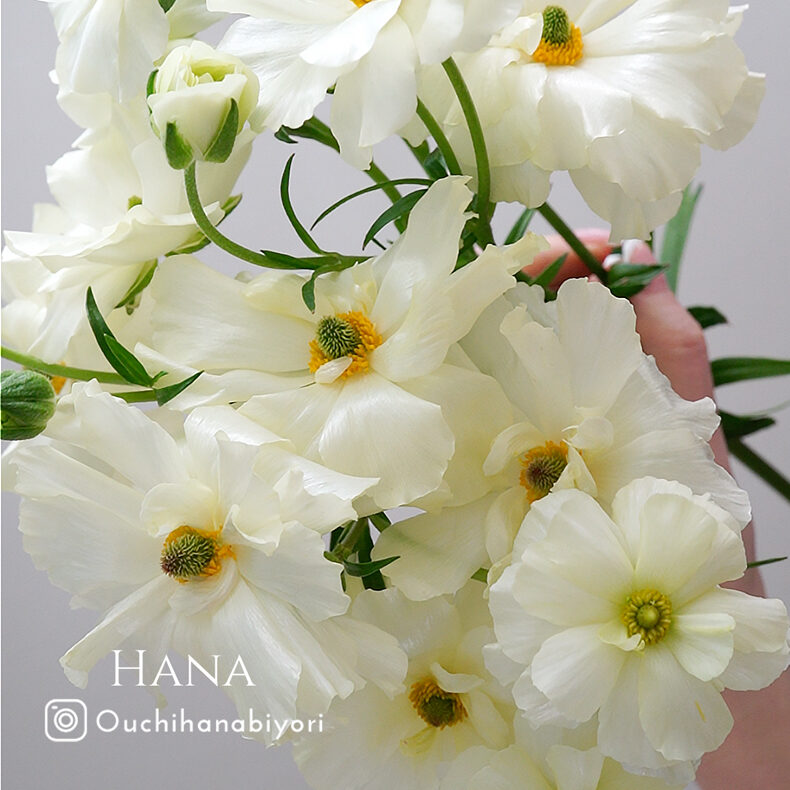
The reason I keep making clay flowers is simple: I love living flowers. The feeling of seeing a real flower and thinking, how beautiful — and wanting to hold onto that shape, keep it close. That’s where it all begins for me.
That love has made me look more carefully. The more I observe, the more I notice. The way this petal curls just so, how the center of this variety fades to the softest shade — each small discovery layers itself into the work, piece by piece.
“Lifelikeness” isn’t just about technique, I think. Something of the way you look at a flower, something of the feeling you have for it, finds its way into what you make. It’s hard to put into words exactly — but that’s how it feels to me.
It doesn’t have to be the same as the real thing. When I manage to give shape to something I felt from a real flower — in my own way — that’s when I think the flower becomes truly lifelike.
That’s where my thinking is, for now.