Realistic Recreations Born from Observation
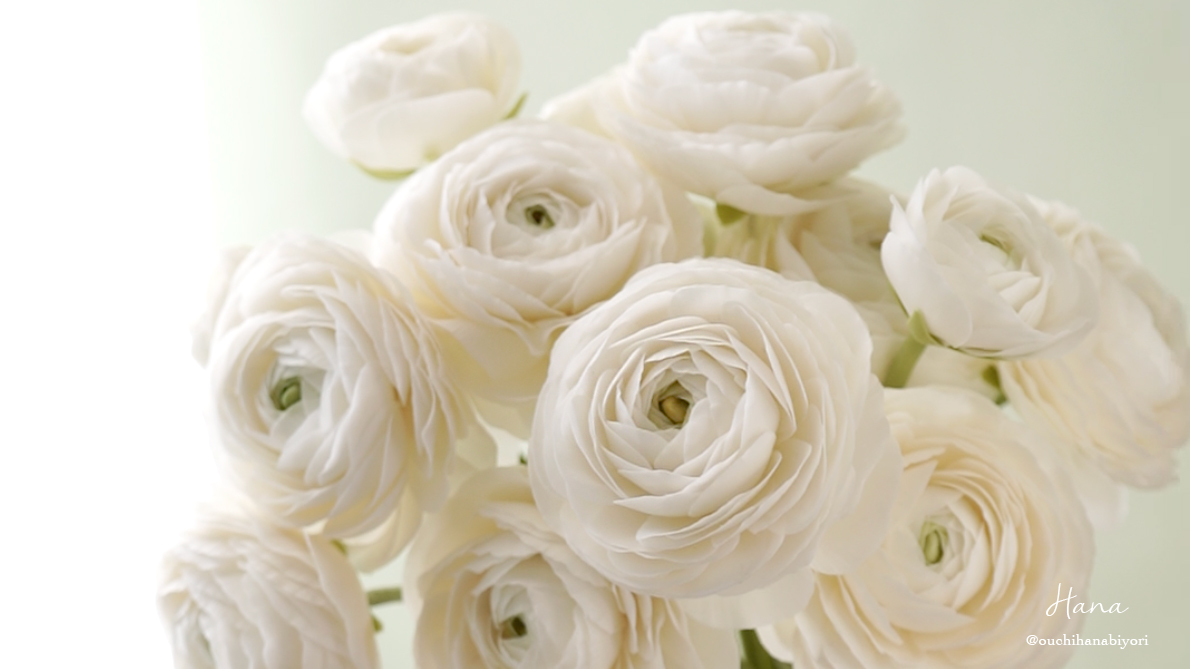
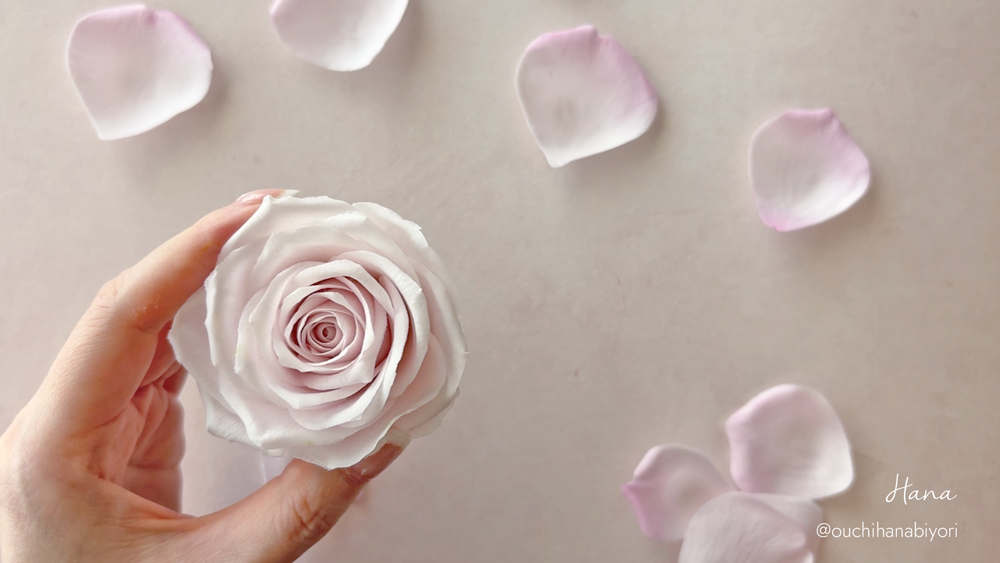
It all starts with holding a real flower and studying its structure. The way the petals layer, the texture, the way light passes through them. Every clue you need to recreate it in clay is hidden inside the flower itself.
Taking the Flower Apart
One thing I almost always do when working on a new flower is take a real one apart, petal by petal, as carefully as I can.
It’s such an exciting process — as I remove each petal starting from the outermost ones, the structure of the whole flower gradually reveals itself. Things you’d never notice just by looking become clear the moment you use your hands. I always feel a little sorry for the flower, but this is one of my favorite parts of the creative process — the moment observation turns into inspiration.
Tracing Each Petal
Once removed, I trace the outline of each petal onto film and sort them into groups by size. It’s always surprising how much the shape and curve can vary, even among petals from the same flower.
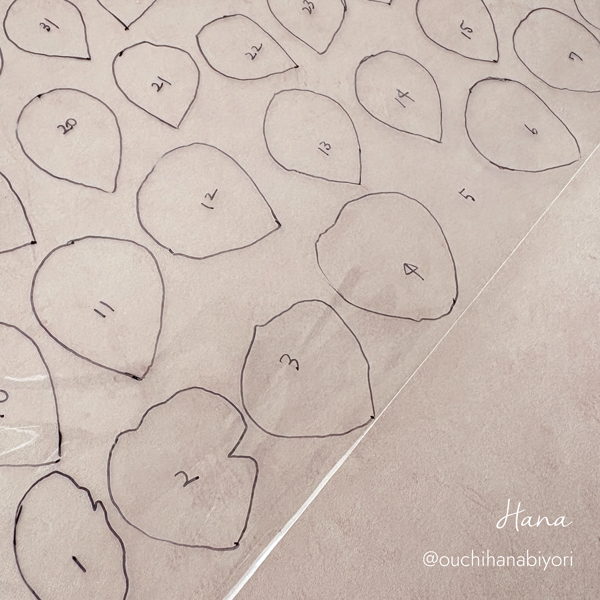
I usually take photos and short videos as I go. Little moments like “this curve is really important” or notes on how the petals overlap — I like to leave myself as many records as I can to look back on later.
From Real Petals to Molds and Cutters
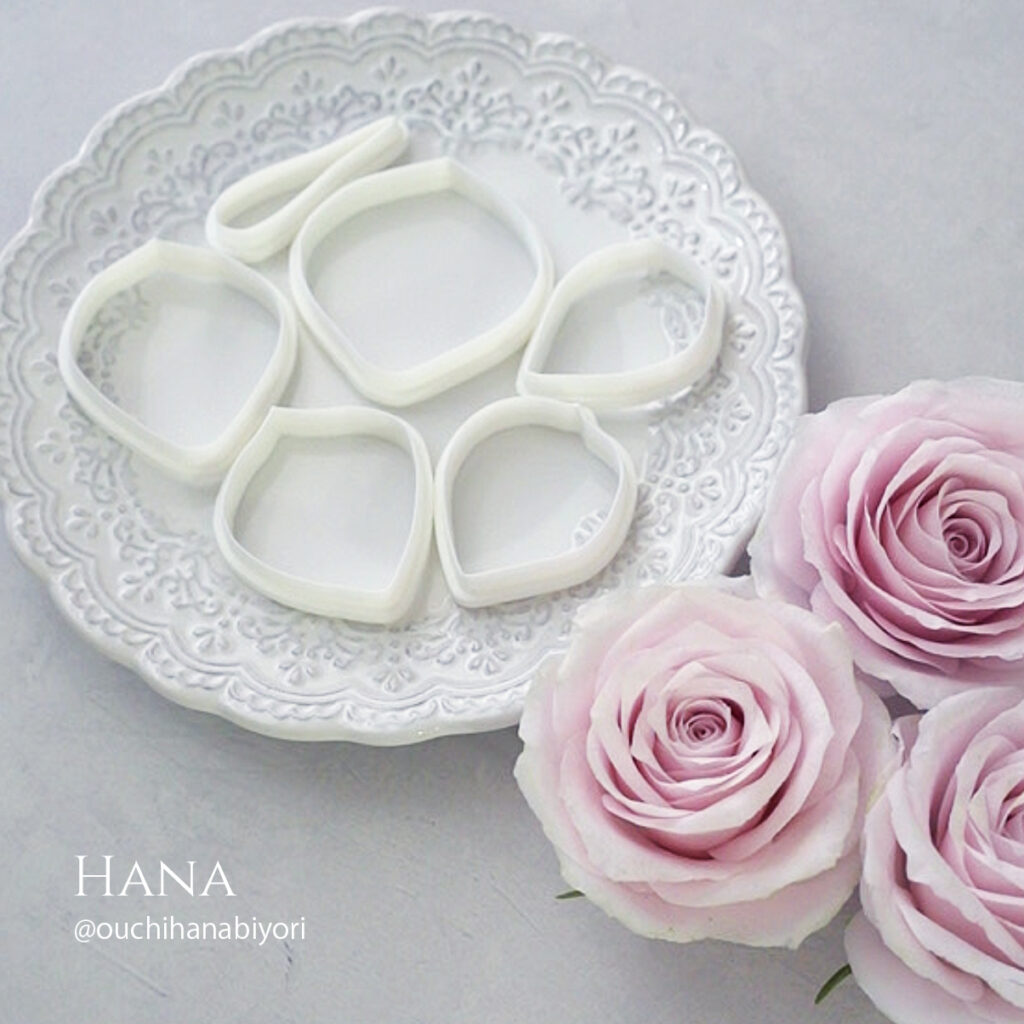
As the observation and note-taking build up, my mind naturally starts shifting toward one question: how do I recreate this in clay?
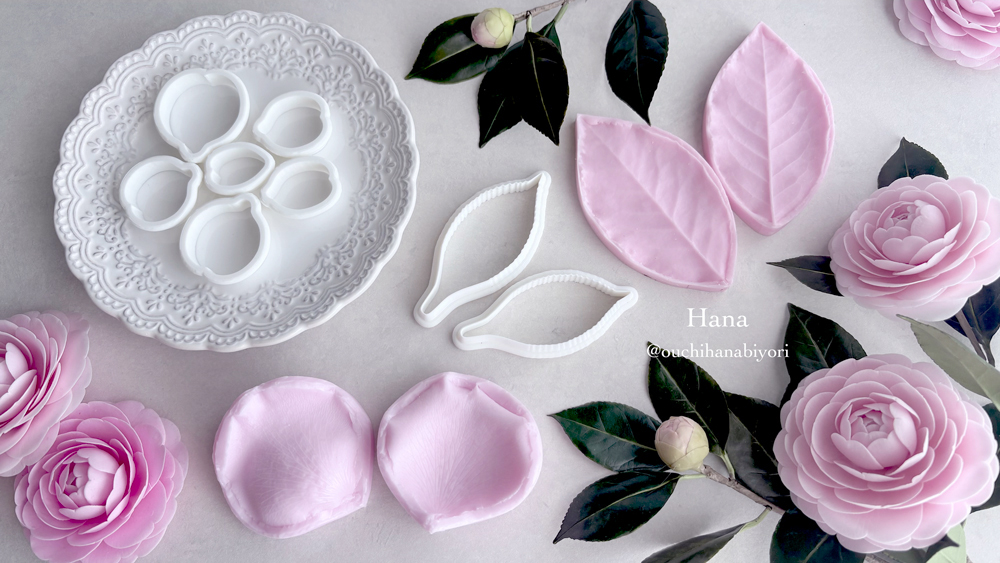
The petal shapes become cutters; the surface texture and curves become molds. It feels like the real flower is transforming directly into the tools I’ll use to recreate it. I might cast an actual petal in silicone to capture its texture, or use a traced outline as the basis for a cutter design. A single flower can lead to so many discoveries — and so many new tools.
Step by Step, a Flower Takes Shape
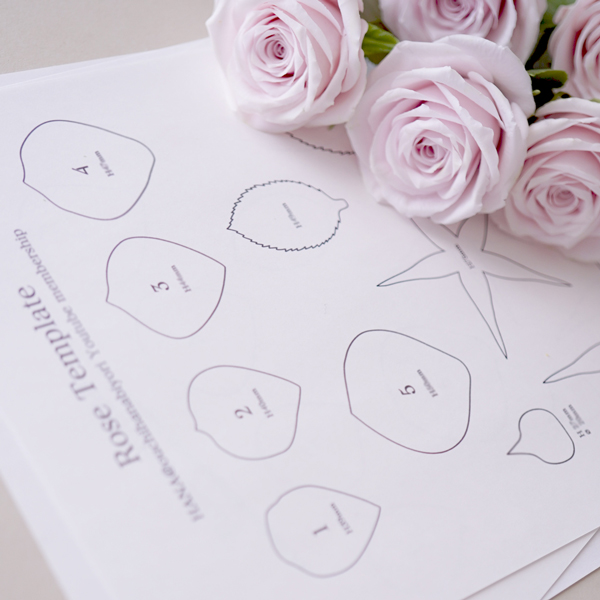
With the tools ready, it’s finally time to start making the petals in clay. Cut with the cutter, press into the mold for texture, shape each one by hand, then layer them from the center outward.
Each step is detailed and takes time. But watching the petals build up one by one, the flower gradually coming together — that moment is something I never get tired of.
I hope to share the tools and process notes that come out of this kind of work with all of you.